
CMS has now implemented the 2026 updates to Remote Therapeutic Monitoring reimbursement, and the new RTM codes are officially live. While the changes may appear incremental on paper, they represent one of the most important shifts yet in how exercise-based and therapy-driven care can be delivered and sustained.With these updates now in effect, providers in 2026 have access to a more flexible, realistic reimbursement framework that better reflects how clinical care is actually delivered. For providers considering RTM in 2026, here is what actually changed and why it matters.
CMS Is Aligning RTM With Real Clinical Workflows
One of the biggest criticisms of early RTM reimbursement was that it required idealized patient behavior and rigid time thresholds. Real patients do not always engage 16 days per month. Real clinicians do not always spend time in clean 20 minute blocks.
The 2026 final rule addresses both issues.
Rather than rewriting RTM entirely, CMS chose to add granularity, allowing reimbursement to more closely match how care is actually delivered.
New RTM Device Supply Codes for Partial Engagement
Previously, RTM device supply codes required at least 16 days of data transmission within a 30 day period. If a patient engaged for fewer days, even for valid clinical reasons, the device component could not be billed.
Starting in 2026, CMS introduces new RTM supply codes for shorter engagement periods.
These new codes allow reimbursement when patients transmit RTM data for 2 to 15 days within a calendar month.
Why this matters
• Supports shorter episodes of care
• Covers post procedural or transitional periods
• Reduces financial risk when patients ramp up slowly
• Makes RTM viable for more patient populations
The original 16 to 30 day supply codes remain in place. The new codes simply add flexibility rather than replacing the existing structure.
New RTM Treatment Management Code for Shorter Time Intervals
CMS also addressed a long standing issue with RTM treatment management time.
Under prior rules, clinical teams had to reach a full 20 minutes of RTM management time before any treatment management could be billed. Ten to nineteen minutes of meaningful clinical work went unreimbursed.
In 2026, CMS introduces a new RTM management code that covers 10 to 19 minutes of qualifying treatment management time per calendar month, while still requiring at least one interactive communication with the patient.
This change acknowledges something clinicians have known all along. Shorter interactions can still be clinically valuable.
The existing RTM management codes remain available for higher intensity care, now broken into more practical increments.
Existing RTM Codes Remain With Clarified Structure
The core RTM framework remains intact.
• Setup and patient education continues to be billed once per episode
• Device supply codes continue to scale based on engagement duration
• Treatment management continues to reward ongoing clinical oversight
What has changed is not the philosophy of RTM, but its operational tolerance.
CMS is signaling that RTM should work across varying levels of patient engagement, not only ideal ones.
Why This Matters for Exercise Based Care
Exercise has always faced a paradox in healthcare.
It is evidence based, low risk, and effective, yet historically difficult to deliver at scale.
RTM changes that by allowing exercise to be
• Prescribed formally
• Monitored remotely
• Adjusted based on patient data
• Reimbursed consistently
The 2026 updates make this model more forgiving and more realistic.
Shorter engagement periods count.
Shorter clinical touchpoints count.
More patients qualify.
This is especially important for populations where adherence builds over time rather than appearing immediately.
Operational Complexity Still Determines Success
While reimbursement flexibility has improved, implementation remains the limiting factor.
Providers still face challenges such as
• Tracking engagement accurately
• Meeting documentation requirements
• Ensuring interactive communication occurs
• Allocating staff time efficiently
The codes alone do not solve these problems.
How Vitala helps providers take advantage of the new RTM codes
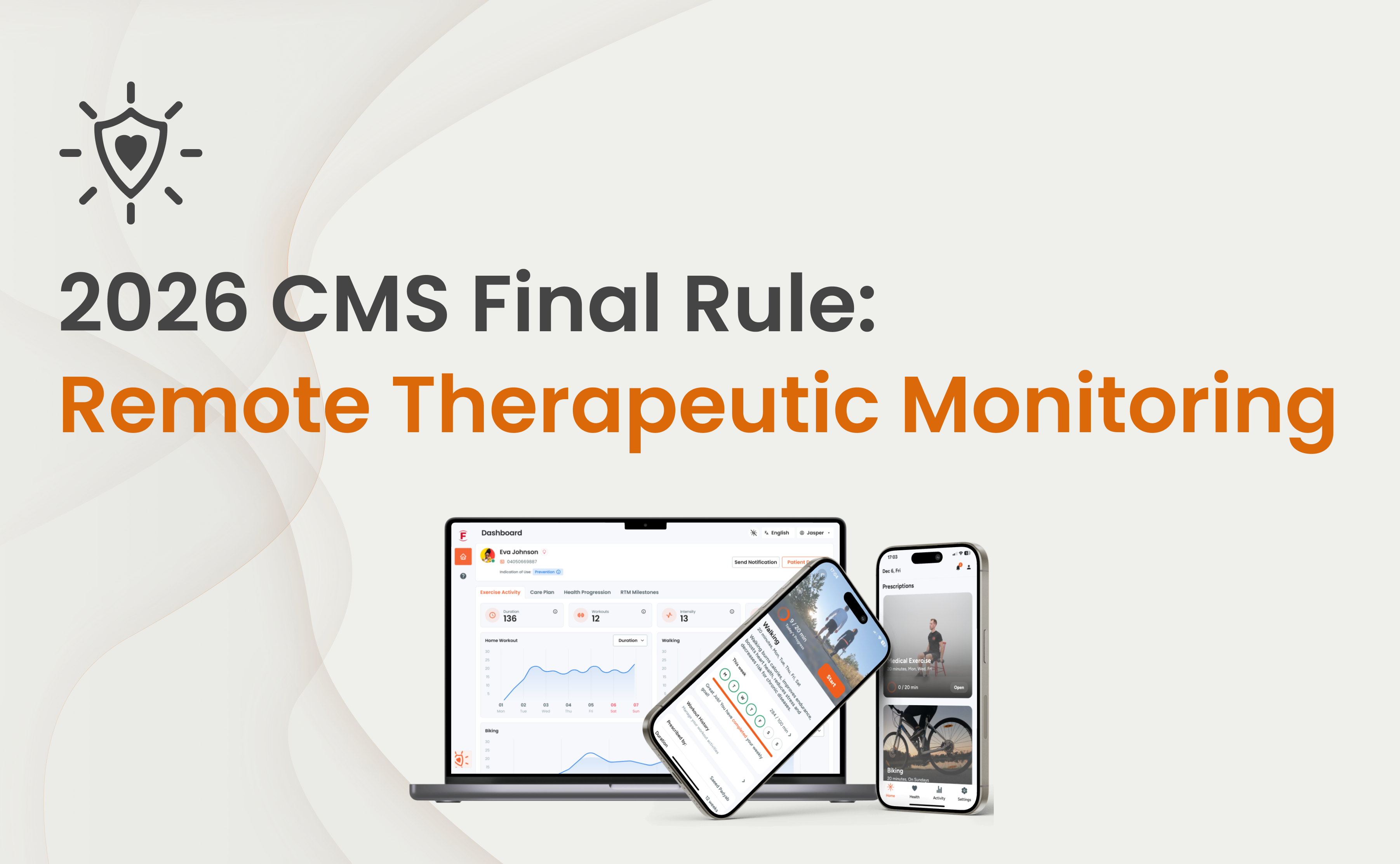
This is where platforms like Vitala become critical. Vitala is designed to operationalize RTM in a way that aligns directly with the new 2026 code structure. The platform tracks patient engagement at a daily level, supports both shorter and longer RTM episodes, and ensures that qualifying interactions and treatment management time are captured and documented correctly. Exercise prescriptions can be adjusted dynamically based on patient data, while providers maintain clinical oversight without needing to manually manage workflows, thresholds, or compliance details.
As CMS expands flexibility, Vitala helps ensure that flexibility translates into actual, billable care rather than added administrative burden.
The Role of Fully Managed RTM Models
As RTM becomes more nuanced, many clinics are shifting away from self managed approaches.
In a fully managed RTM model
• Patients are onboarded by a dedicated care team
• Engagement and data are tracked automatically
• Clinical interactions are scheduled and documented
• Providers maintain oversight without operational burden
This model aligns well with the direction CMS is taking. More flexibility in reimbursement pairs naturally with more structured operational support.
CMS Is Playing the Long Game
The 2026 final rule continues a clear trend.
CMS is not experimenting with RTM.
CMS is refining it.
Each update brings RTM closer to real world clinical practice rather than idealized workflows. That is not a short term signal. It is a long term commitment.
Final Thoughts
The 2026 RTM updates may not be headline grabbing, but they are foundational.
They make RTM more inclusive, more realistic, and more sustainable, especially for lifestyle and exercise driven care models.
For providers willing to adopt the right operational approach, RTM is no longer a narrow reimbursement opportunity. It is becoming a core infrastructure for modern therapeutic care.
Ready to see how RTM can work in your practice in 2026?
Vitala helps providers operationalize the new RTM codes without added complexity.
Schedule a demo today and see it in action!

.jpg)


